A Classic Sourdough Boule, no inclusions
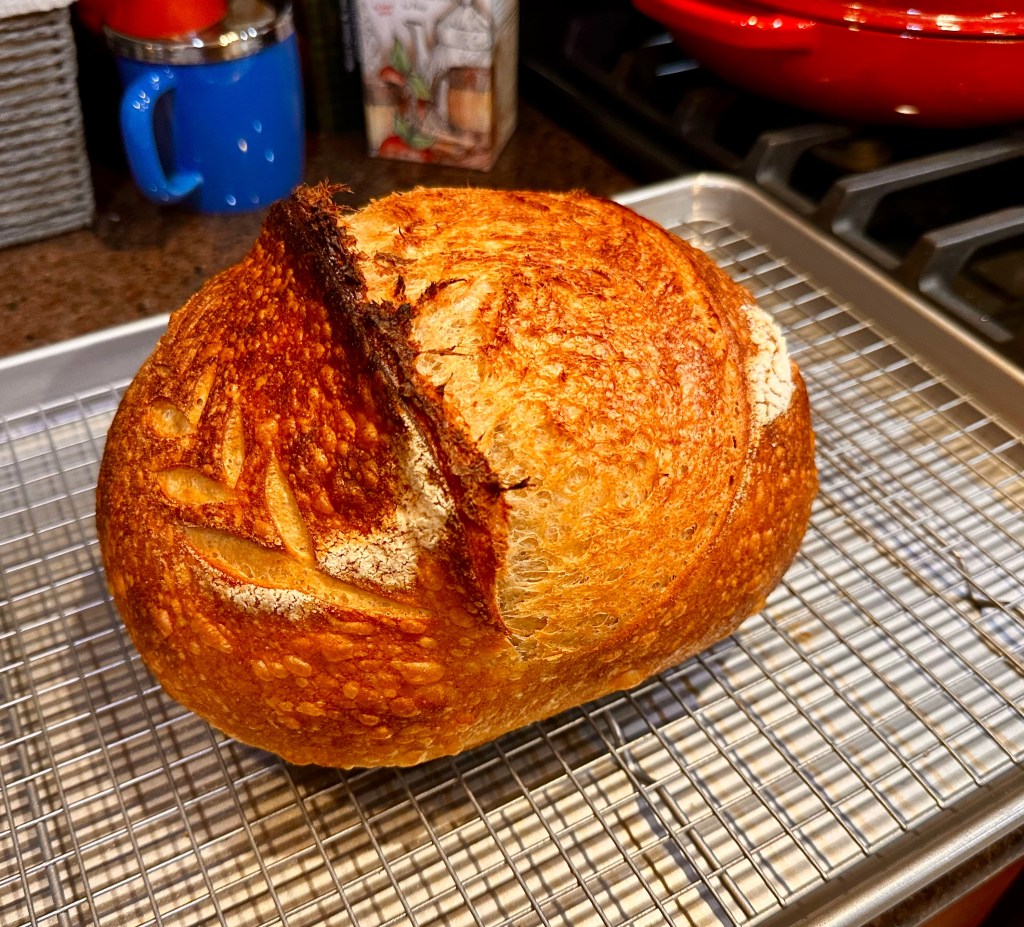
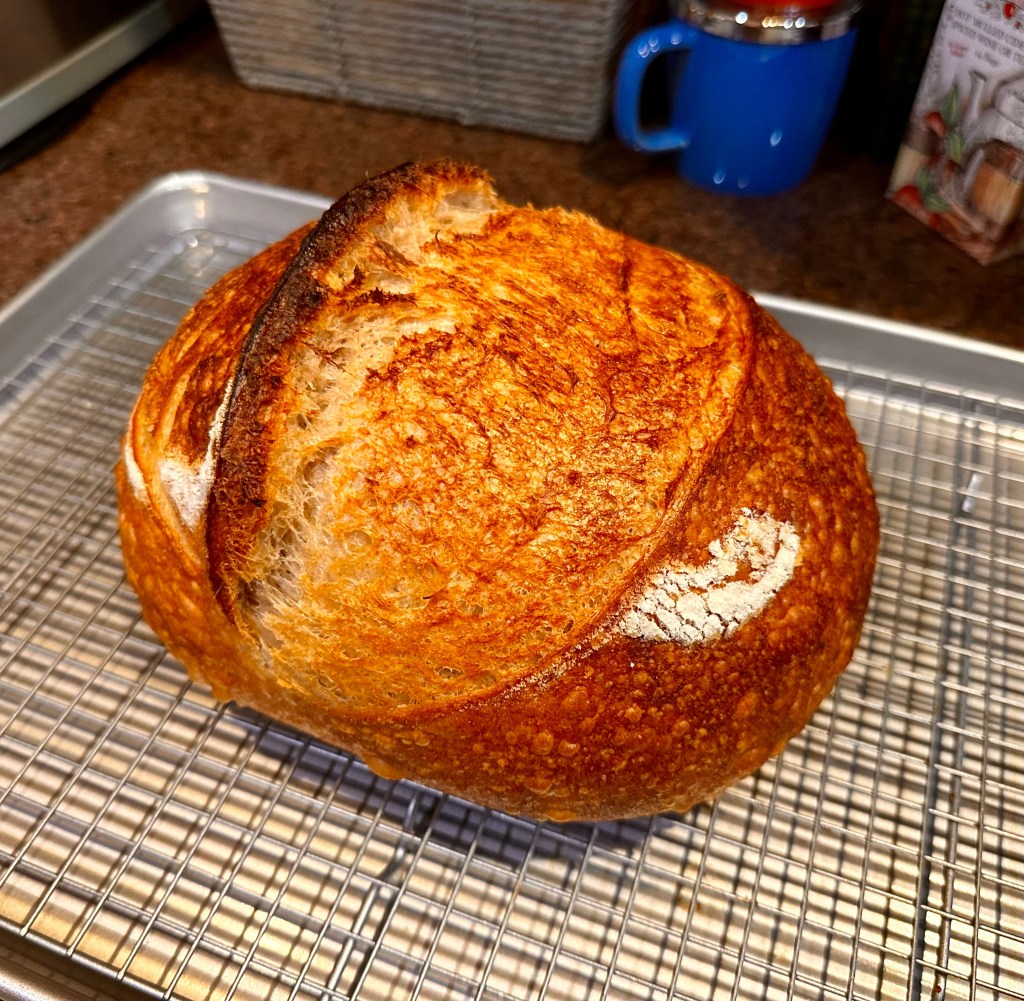
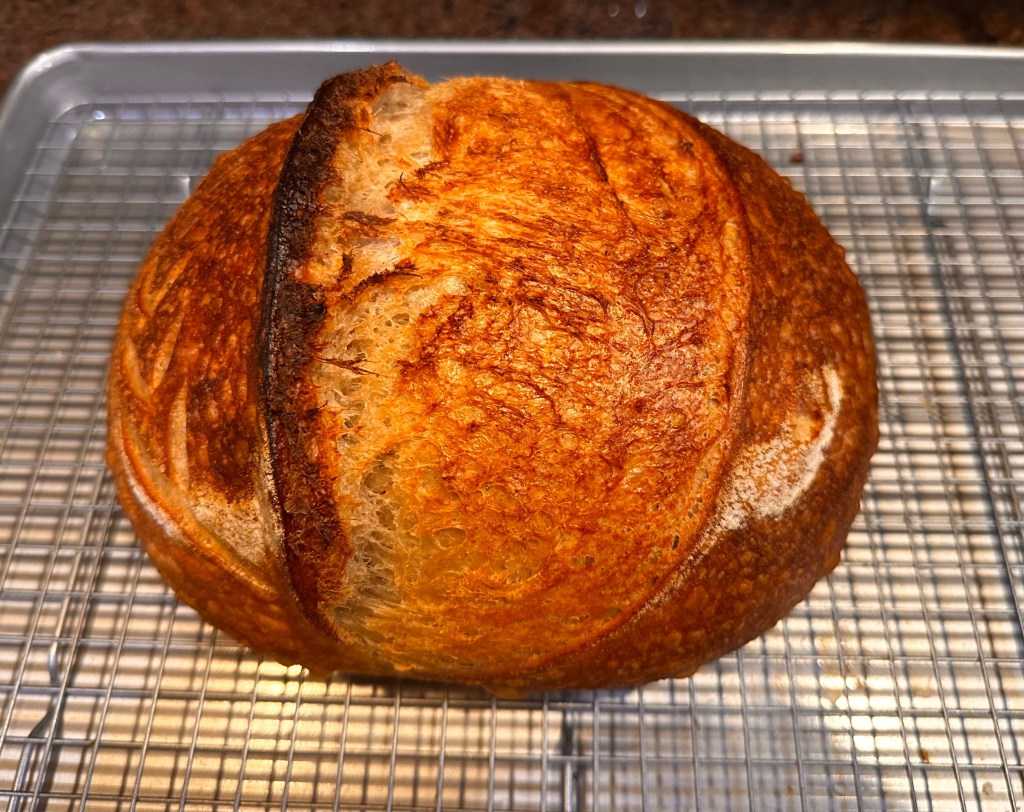
I might have said this before, but sometimes you must return to basics just so you don’t forget where you’ve been and how you arrived there. After baking a couple of inclusion-loafs recently, two of which I was not proud of, it was time to clear the slate and just make some plain, good, sourdough. That’s what this loaf was. If there’s anything special about it, I used a mix of four flours and I open-baked in my oven.
Recipe
- 300 Grams, King Arthur Bread Flour
- 50 Grams, King Arthur Whole Wheat
- 75 Grams, Central Milling Artisan Bakers Craft (ABC) Flour
- 125 Grams, Central Milling Old World Organic
- 385 Grams, Deer Park Bottled Water, 90 degrees temp.
- 2 Teaspoons (approx. 14 Grams), Himalayan Pink Fine Sea Salt
- 1 Tablespoon Diastatic Malt Powder, King Arthur Brand
- 68 Grams of Active, Stiff Starter (60% Hydration)
Process
- Dough combined in the Kitchen Aid Professional Mixer: Start Fermentolyse
- 3 Minutes Speed 1 to combine all ingredients
- 5 Minutes Speed 2 for kneading
- 15 Minutes Later
- As described in the Sourdough Journey, a series of three activities to strengthen the Gluten Network early in the bake:
- 3 Minutes of Pinch & Fold
- 3 Minutes of Rest
- 3 Minutes of Slap & Folds
- 3 Minutes of Rest
- 3 Minutes of Rubaud Mixing
- As described in the Sourdough Journey, a series of three activities to strengthen the Gluten Network early in the bake:
- Cover and rest for 30 Minutes
- Stretch & Fold (4-8 folds), rest for 30 minutes
- Roughly three hours later, included one more Stretch & Fold, followed by two Coil Folds 30 minutes apart.
- Let dough continue Bulk Fermentation
Dough temperature started at 75 degrees, but slowly decreased to about 70 in the cool garage. Bulk Fermentation dragged on and I was forced to place the dough in the refrigerator, still in the mixing bowl for the night. Around 7 AM I placed the dough back on the counter and waited another three hours to complete Bulk Fermentation. In order to accelerate the process, I used the Brod & Taylor Raisenne Heated Mat, resulting in an 83 degree (F) dough by the end of three hours. This is a little too warm and fermentation can really bite you if you’re not monitoring carefully. Fortunately, I managed to catch it in time.
Pre-Shaping & Shaping
I dumped the dough out on the counter and pulled the dough together to tighten things up. I then flipped right-side-up and created some dough tension using my bench scraper through a series of rotations and pulls across the surface. I then let it sit on the counter for 30 minutes uncovered to help dry things out.
For the actual shaping, I just tightened things up a bit using my dough scraper and placed the dough into a new wood-pulp Bulka Banneton. Then I covered the Banneton with a porous and breathable Bouffant (Hair Net/Cap).
Baking
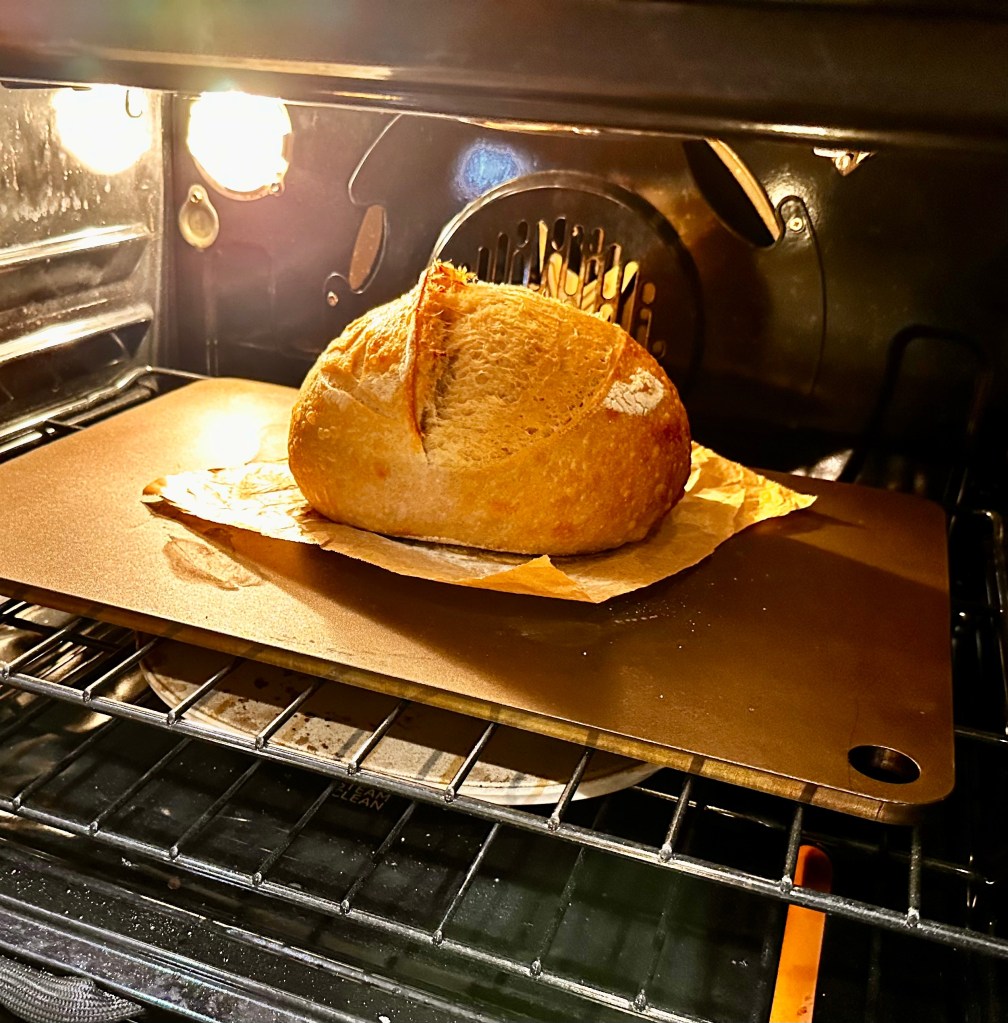
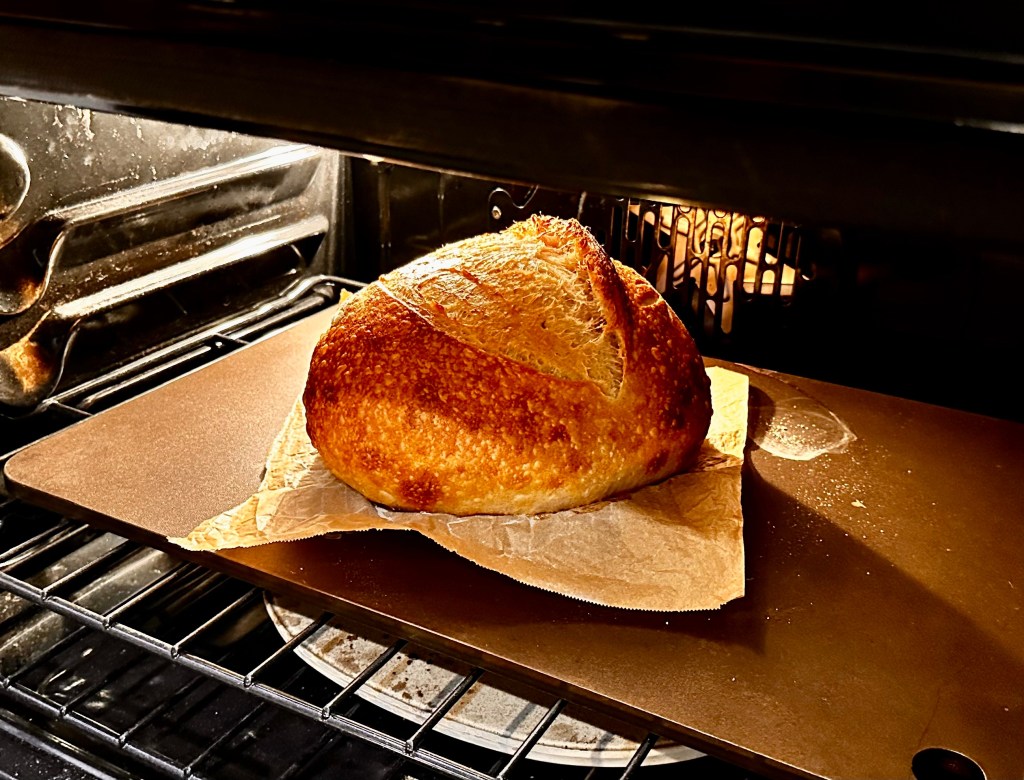
I’ve had good luck in the past with Open Baking. Since I have a Gas Oven I utilize a Brod & Taylor Baking Shell to keep the steam in for the first 20 minutes. I assist this process by throwing a few ice cubes under the dome when loading the dough.
You can judge for yourself, but I consider this a very successful bake! Between ice cubes next to the dough and spritzing the underside of the Baker’s Dome with water, the amount of oven-spring was off the charts! Please note that in the pictures.
Expectations
As I sit here while the dough cools, I can’t wait to slice it open and take a big bite of my favorite bread. I’ll update this post after I get a look at the crumb. I used a similar dough combination recently (minute the Whole Wheat), and it was the softest, most supple loaf I’ve ever come across. It tasted amazing and I hope this bake does as well.
 Baby Steps ... to Bread
Leave a comment