Inclusions
It’s often said that “necessity breeds invention”. And this is an example. Before deciding to bake sourdough on this day I had just finished two loafs for a family friend. One was a really nice Jalapeno-Cheddar Batard. The other was a regular Sourdough Boule. It came out a bit on the flat side. I knew the regular sourdough loaf was underfermented when I shaped it and put it in the fridge. I was hoping it would continue the fermentation while cooling down. Nope…it was a heavy, stiff loaf that never did mature. So for those two reasons…a failed bake, and giving away the only fresh bread in the house, I decided to put together another bake.
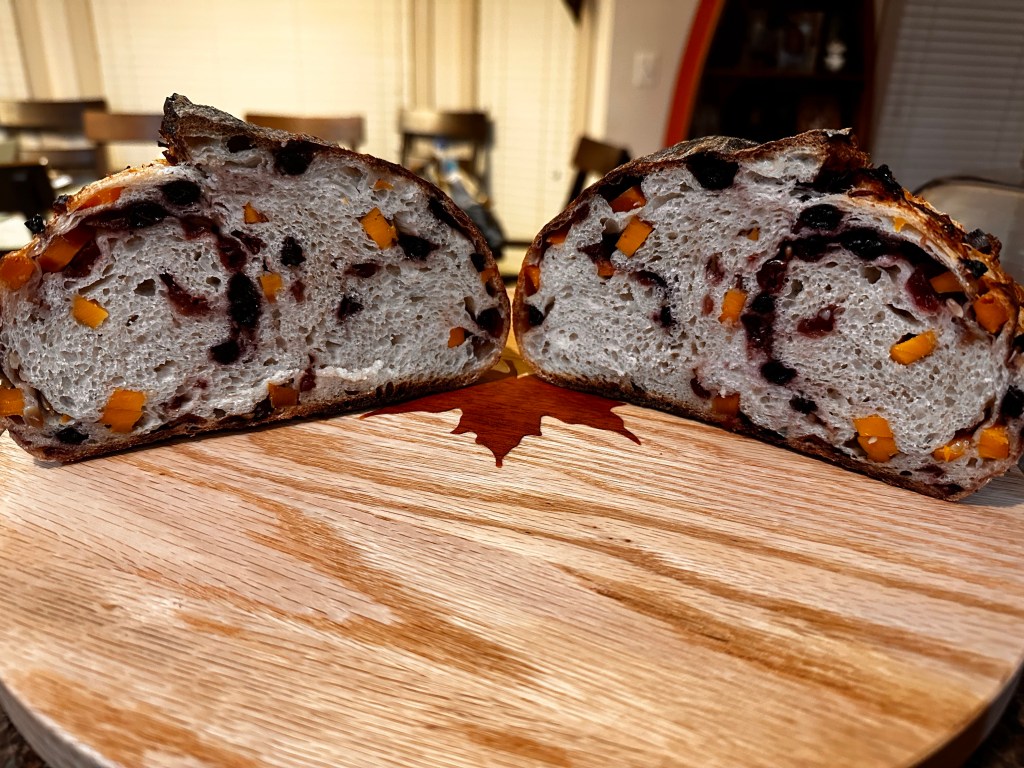
I looked through my drawer of “inclusions” in my sourdough workstation. This is otherwise known as my garage workbench. I found several half-used bags of dried berries. One of these bags included sunflower seeds. Between the three half-packs I had over 100 grams of dried fruit so that inclusion was decided. I then looked in my refrigerator drawer for a suitable cheese. I hoped to find the block of Havarti we purchased a week earlier. No luck…I found the cheese but it had started to go bad and I threw it away. In the end I found a block of Smoked Cheddar that we purchased at a restaurant in West Virginia. It had a great smoky smell and I thought the sharp-cheddar would complement the sweet fruit. I cut it up into 100 grams of small chunks. So there…done with inclusions.
Flour Choices
For this bake I mixed two of my favorite flours:
- 450 Grams of Central Milling Artisan Baking Craft Plus
- 50 Grams of King Arthur Whole Wheat
Additionally, I added a tablespoon of Diastatic Malt Powder for improved flavor, color, and crust. I also added a tablespoon of Vital Wheat Gluten for improved rise and structure.
The Recipe
- 450 Grams of Central Milling Artisan Baking Craft Plus
- 50 Grams of King Arthur Whole Wheat
- Water #1: 350 Grams
- Water #2: 10 Grams (w/salt)
- Starter: 100 Grams of Stiff Starter (60% Hydration)
- Salt: 10 Grams (Redmond Real Salt)
- 1 Tablespoon of Diastatic Malt Powder
- 1 Tablespoon of Vital Wheat Gluten
The Process
Lately I’ve been doing a lot of up-front dough strengthening. This includes pinch & folds for three iterations every three minutes. After that I follow up with slap & folds along with stretch & folds every thirty minutes. This dough felt just about perfect during this process and I was optimistic for a good bake.
At the four-hour point, I finished strengthening the dough. It was time to leave things alone for the rest of bulk fermentation. With a 77 degree dough temperature the Sourdough Journey Chart recommended a 6 hour Bulk Fermentation and a 40% rise. For this, I moved the dough to a glass vessel and placed it in The Sourdough Home. Here’s a picture:
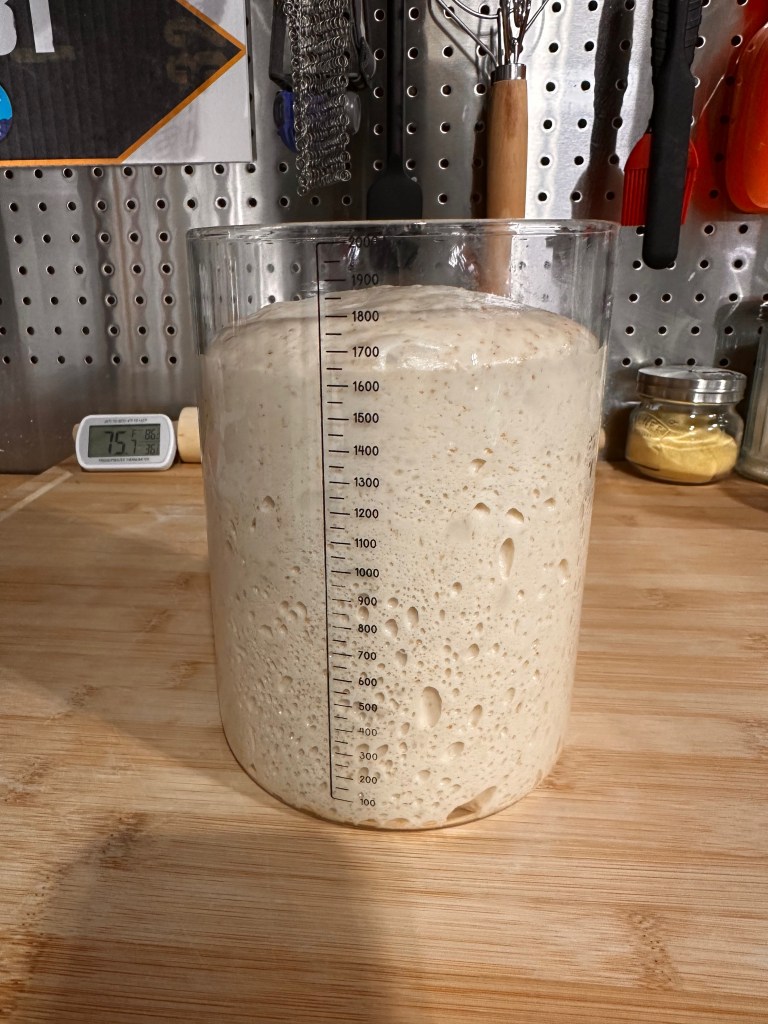
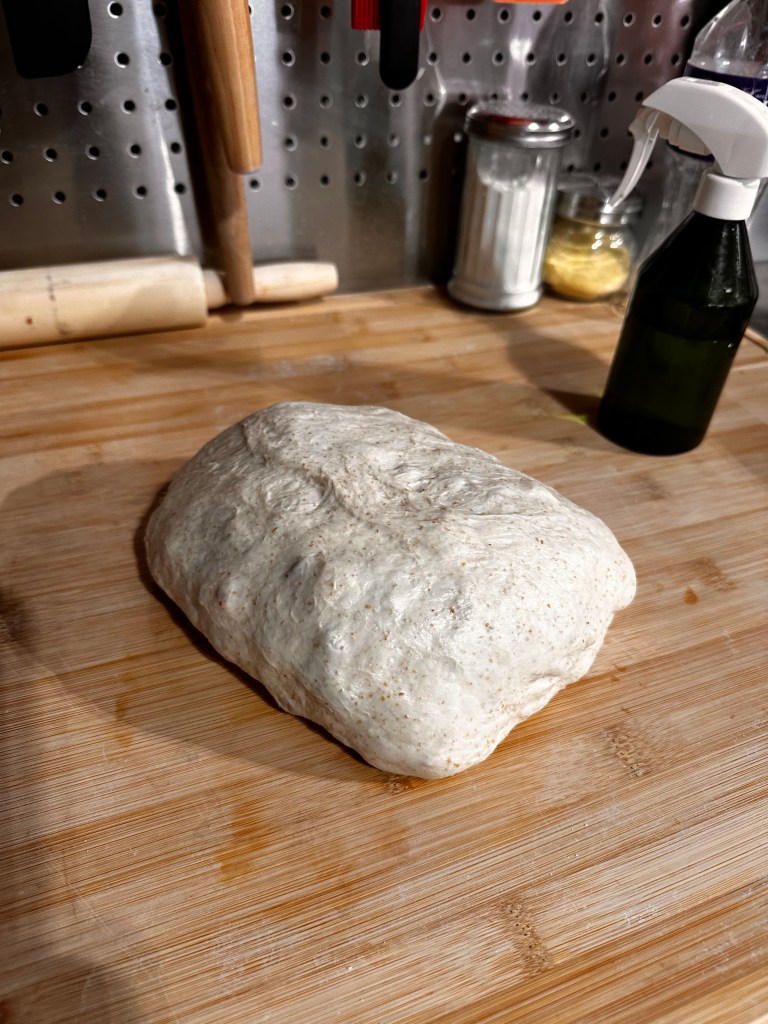
Here you can see that the dough had more than doubled in size, having started at 750 milliliters…so much for the 40% rise. You can also see how active this dough was, with gas bubbles coating the sides. And you can see the inclusion ready to pop right through the dough skin! I laminated the cheese, seeds and berries into the bake. I’ve been doing this as a matter of routine lately. I used to include things during the stretch and folds. However, it made for a dense dough. It was hard to judge when it was complete and ready for the Banneton when full of inclusions so I’ve migrated to the lamination technique.
The Bake
I normally bake my Batard’s containing Inclusions in a small Dutch Oven called a Kook. That works well but I don’t think it’s the optimum way to bake. I believe the smaller size of the Kook limits expansion to some degree. As such, I decided to using my Cooking Steel and the Brod & Taylor Baking Shell. The Shell holds the steam for the first 20 minutes of the bake. I then remove it to brown the loaf. Having a gas oven limits what I can do with regards to steam. The oven just does not hold steam inside for very long so I’ve resorted to the Baking Shell for that purpose.
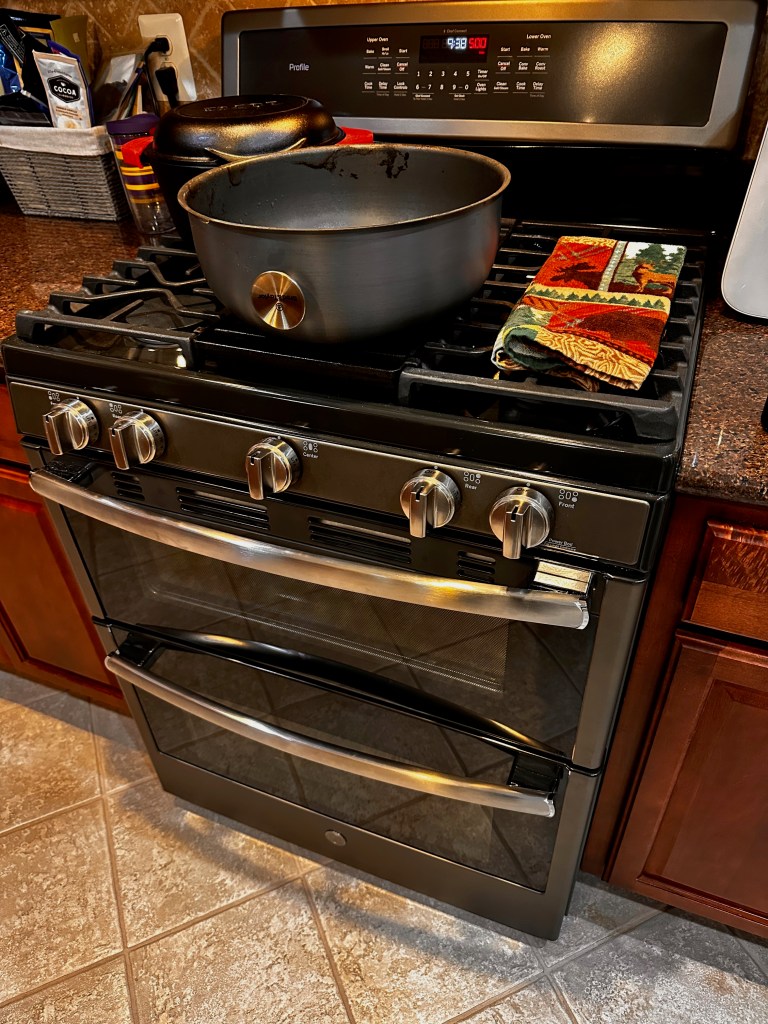

You can see how I’ve “misted” the inside of the Dome for added steam. You can also see the staged ice-cubes in the yellow cup. I throw these ice-cubes under the dome right before closing the oven door.
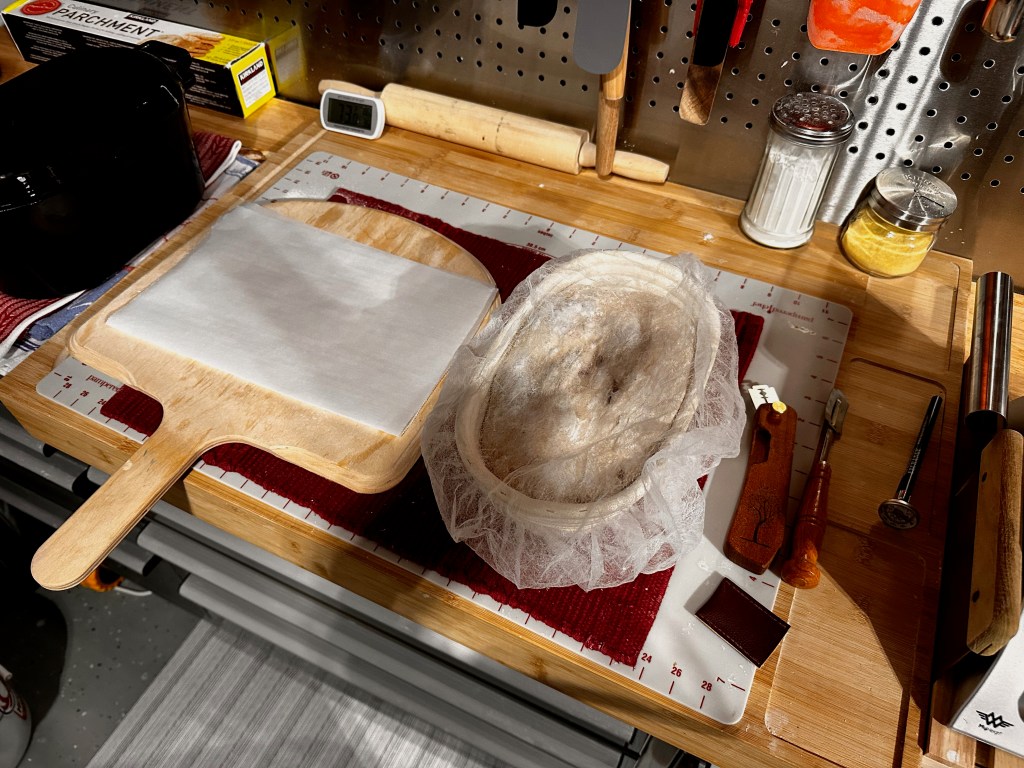
Sometime, preparation is the key to good execution. Here is the pizza peel ready to go with a piece of parchment. My loaf is resting in the Banneton. I also have two Lame’s at the ready for scoring.
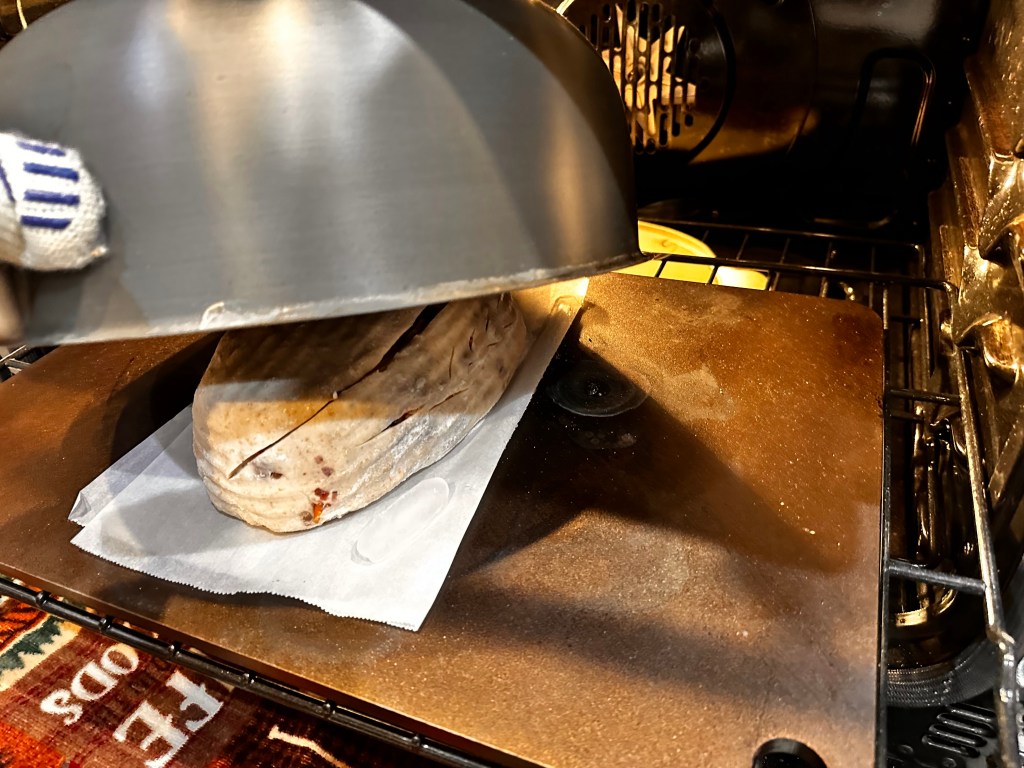
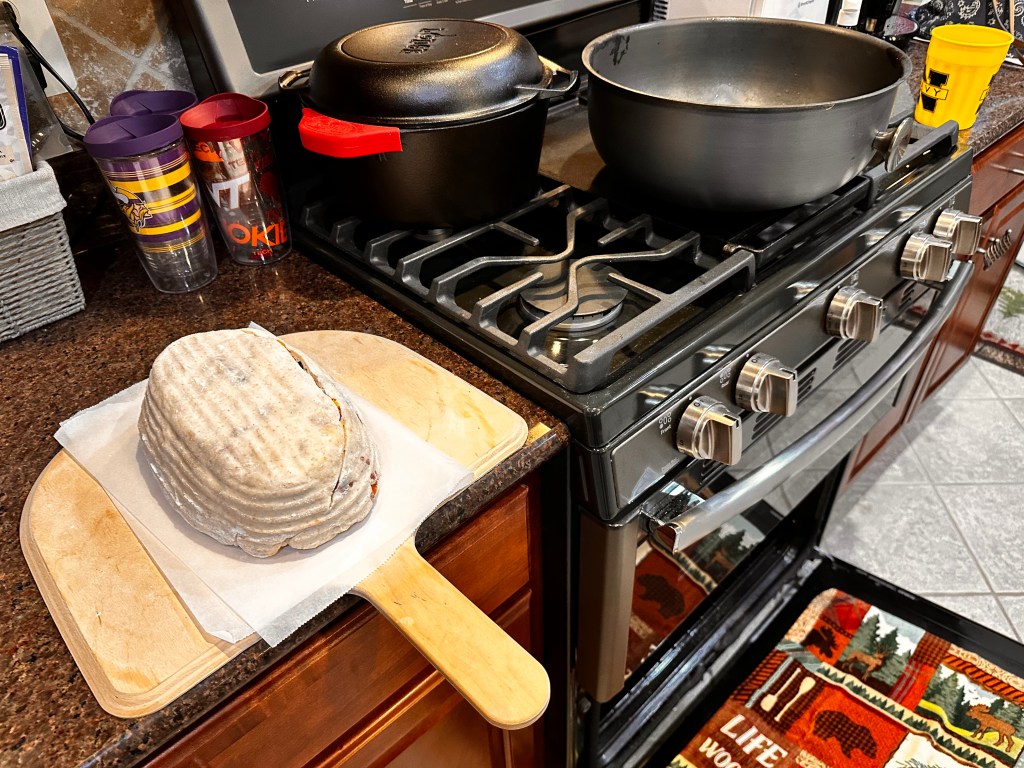
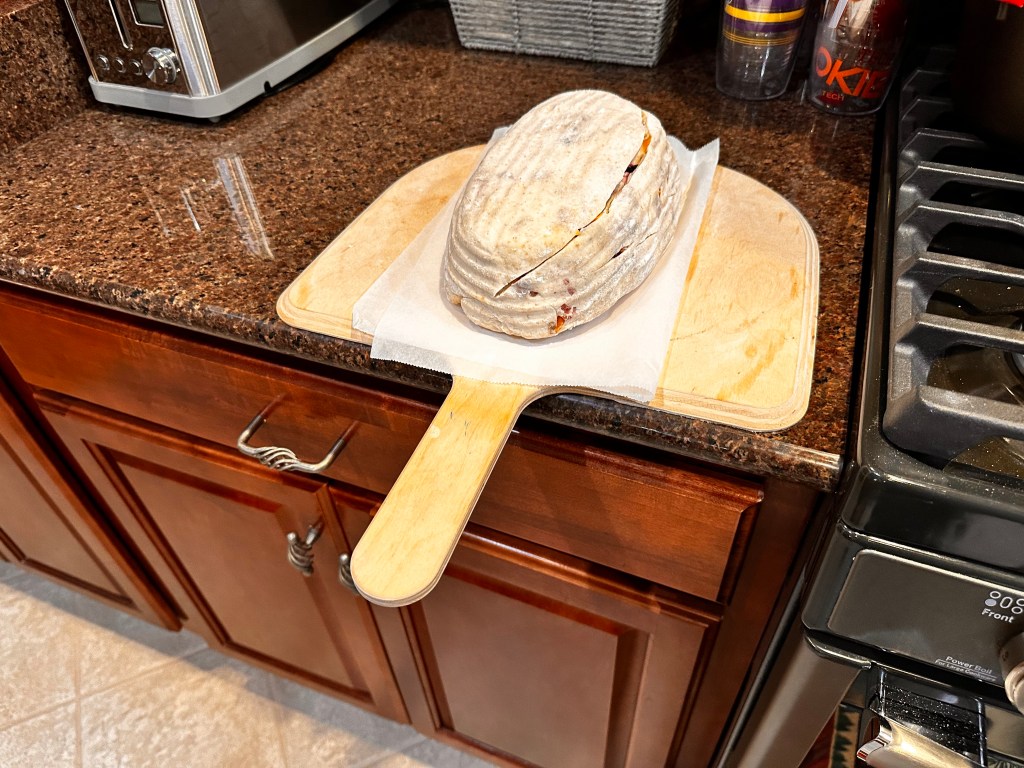
Above pics show the loaf just before loading. The loaf is finally on the Cooking Steel. It is getting ready to disappear below the dome for 20 minutes.
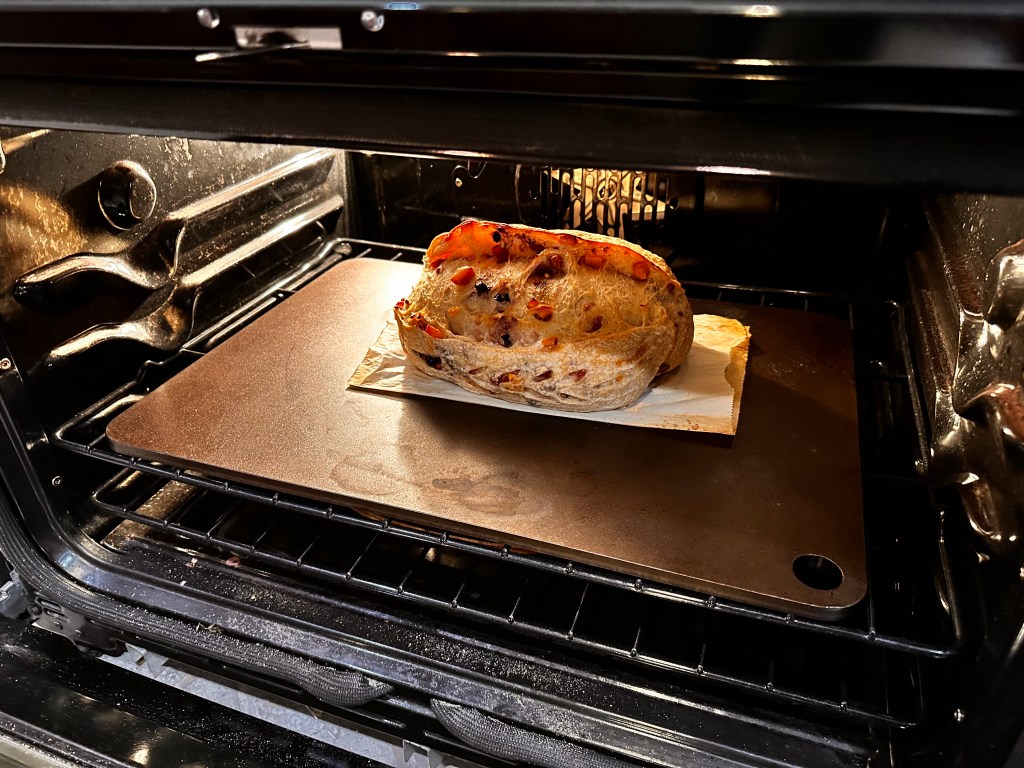
And after 20 minutes under the dome, here is the result. Looking good. I like the ear and the phenomenal oven-spring so far. Now the hard part: continued baking until it’s done and to temperature. This proved a challenge. I lowered the oven temp to 400 degrees, but in retrospect I should have lowered to 425. I ended up with a nice dark loaf, but the internal temperature was still below 200 degrees. This prompted continued baking with the dome covering the dough again to keep it from getting too dark. I baked for an extra 5-10 minutes before internal temps hovered around 205.

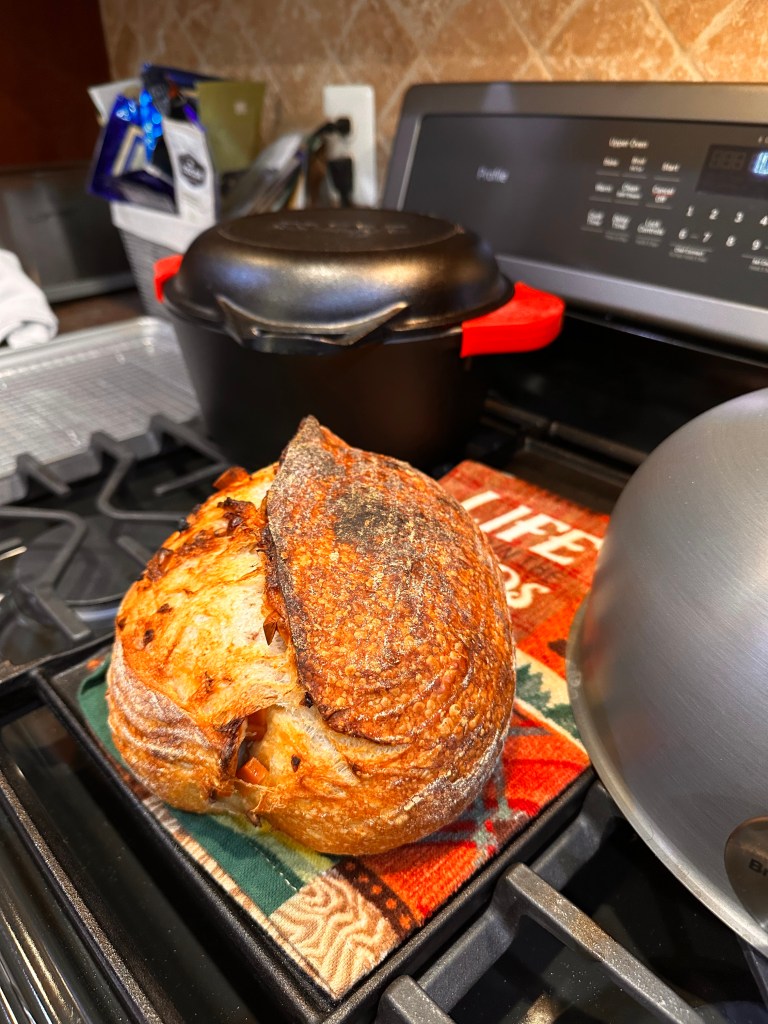
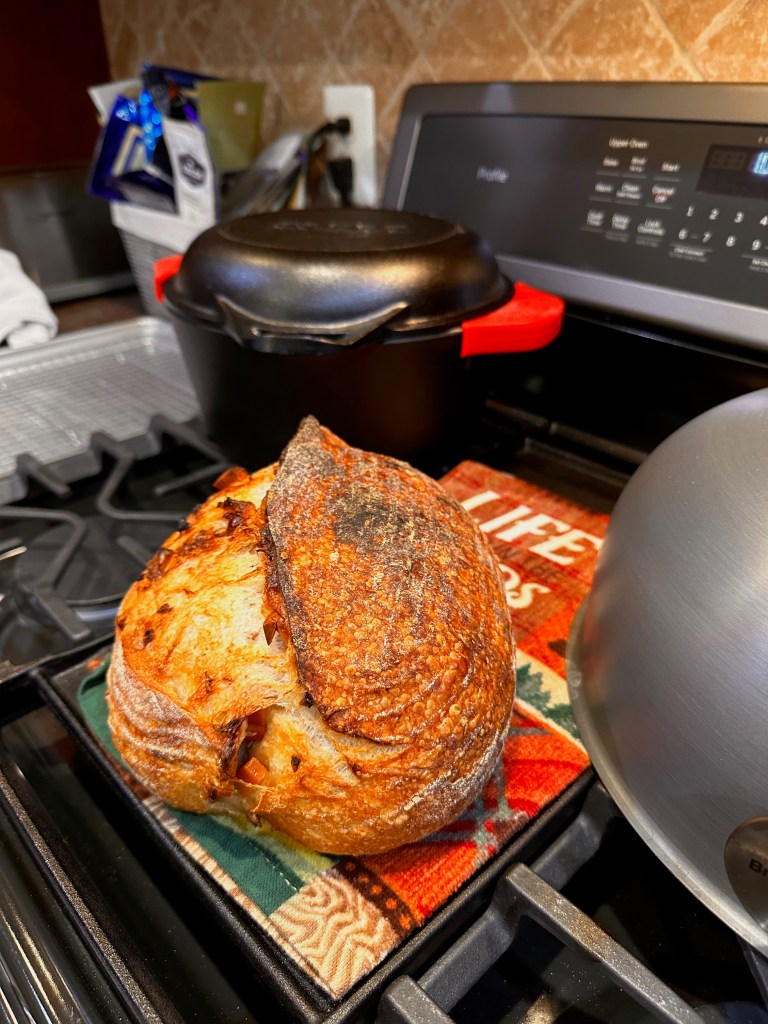
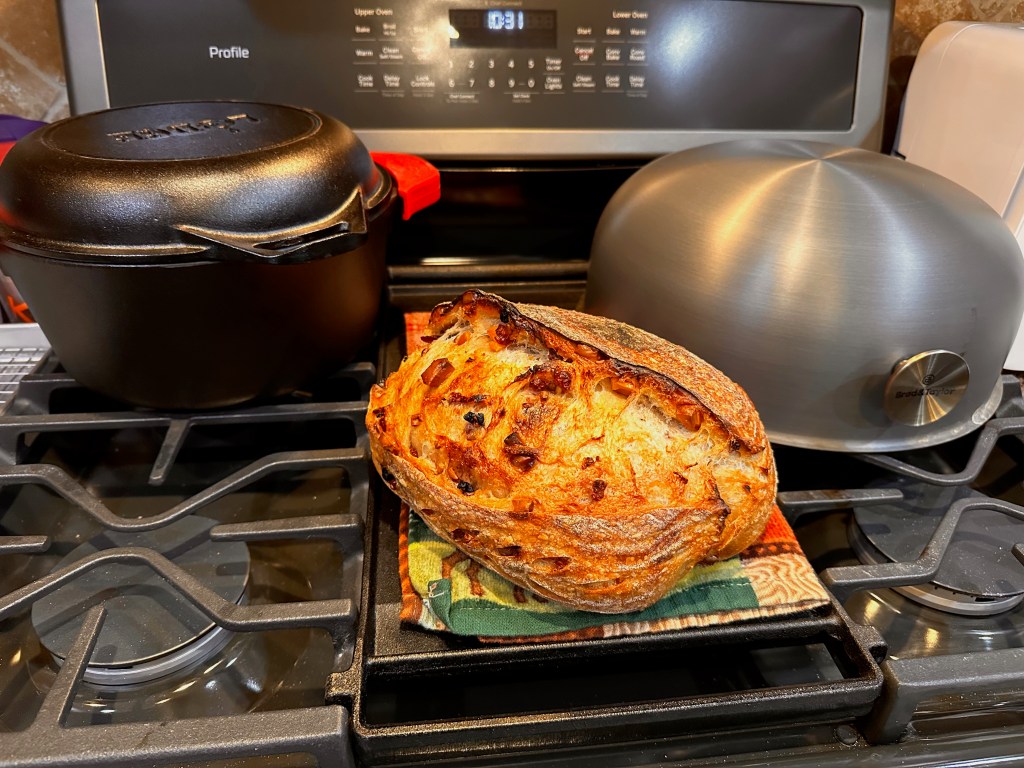
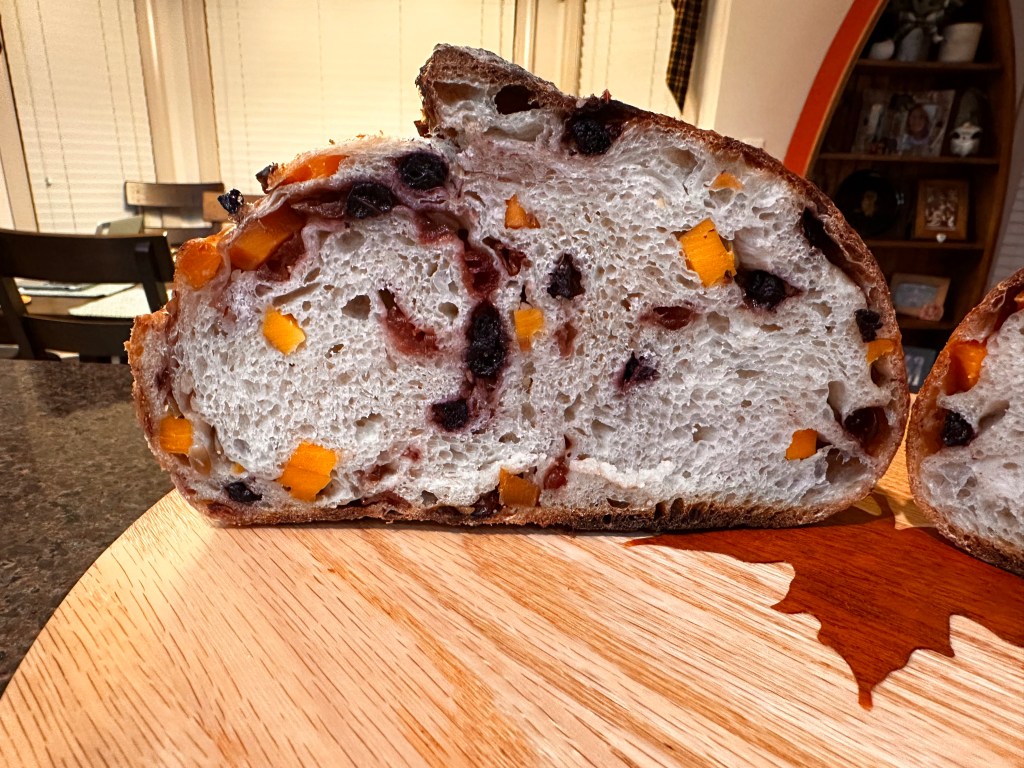
I know these pictures are at the top of the page, but I just love how this loaf turned out! Lots of flavor, a crisp crust, a nice ear, and really good inclusions. What’s not to like!!
 Baby Steps ... to Bread
Leave a comment